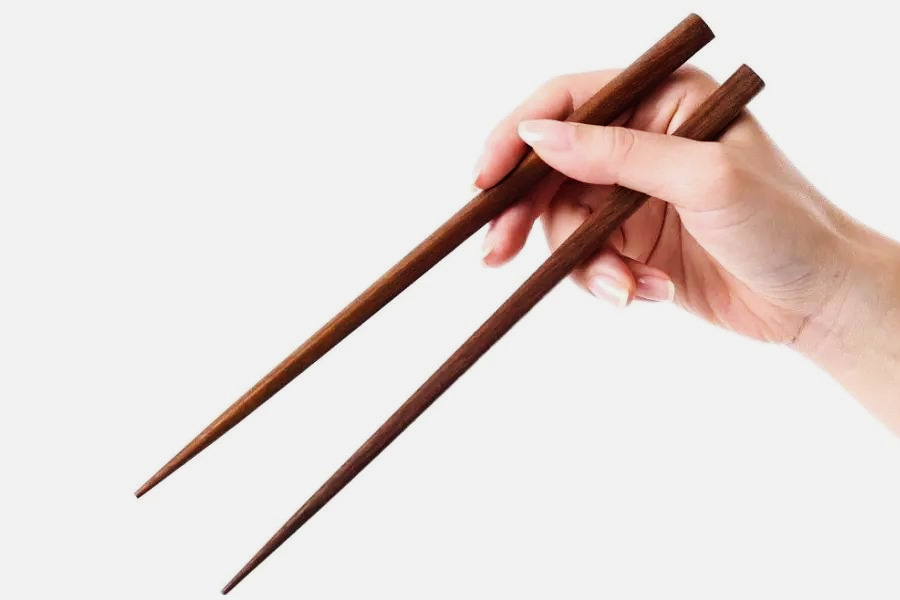
In Japan, how you use chopsticks isn’t just about eating, it’s about manners. People notice, especially older generations. Holding chopsticks the correct way is seen as a sign of upbringing, respect, and self-discipline. If you’re traveling in Japan or simply want to improve your skills, learning the proper technique is worth your time.
It might feel strange at first, but once you get the movement right, it becomes natural. Let’s break it down step by step.
Step-by-Step: How to Hold Chopsticks the Right Way
Holding chopsticks correctly is a matter of finger position and small, controlled movements. Here’s how to do it, the Japanese way.

1. Start with the bottom chopstick
First, position the bottom chopstick between your thumb and the side of your palm.
2. Place on the side of your ring finger
Place the bottom chopstick between the base of your thumb and the side of your ring finger. This chopstick stays still. It acts like a foundation.
3. Position the top chopstick
Hold the second chopstick like a pen, using your thumb, index finger, and middle finger. This is the only chopstick that moves.
4. Move the top chopstick only
Use your index and middle fingers to open and close the chopsticks. The bottom one should stay completely still. Your thumb simply supports the motion, don’t force it to move.
Pro tip:
Start by picking up something light, like a piece of tissue or sliced seaweed. Once you’re confident, try moving on to heavier or slipperier foods.
Chopsticks for Kids in Japan
In Japan, children usually learn how to use chopsticks around the age of 3 or 4. To help them, there are special training chopsticks (エジソンの箸) with loops or guides that show exactly where to place each finger.

These are widely available at stores like:
- Daiso
- Akachan Honpo
- Amazon Japan
They’re often decorated with cute characters and are a great way to build muscle memory early on. If you’re raising a child in Japan or just visiting, these tools can make meals smoother and less stressful.
Japanese Chopstick Etiquette: What Not to Do
Knowing how to hold chopsticks is important but knowing what not to do matters just as much. In Japan, there are a few behaviors that are considered rude or even offensive.
Don’t stick chopsticks upright in rice
This is done only during funerals and memorial services. Doing it at a dinner table is seen as disrespectful.
Don’t pass food chopstick-to-chopstick
This also mimics a funeral ritual. Always place the food down on a plate for someone else to pick up.
Don’t stab food
Using your chopsticks like a fork is frowned upon, unless you’re a small child learning.
Don’t point with your chopsticks
Waving them around or pointing at someone while speaking is bad manners.
Struggling with Grip? You’re Not Alone.
Even Japanese people sometimes struggle when switching to metal or plastic chopsticks. If you’re finding it hard:
- Use wooden chopsticks. They offer better grip and are beginner-friendly.
- Keep your hand relaxed. Don’t squeeze too tightly.
- Focus on moving only the top stick. That’s the key.
- Practice with dry foods like edamame or cucumber slices before moving on to slippery foods like noodles or sashimi.
Chopsticks may seem simple, but in Japan, they’re tied to culture, respect, and presentation. Learning how to hold them properly not only helps you eat with ease, it shows appreciation for local manners. Whether you’re visiting Japan or eating at a Japanese restaurant abroad, mastering this small detail will go a long way.


