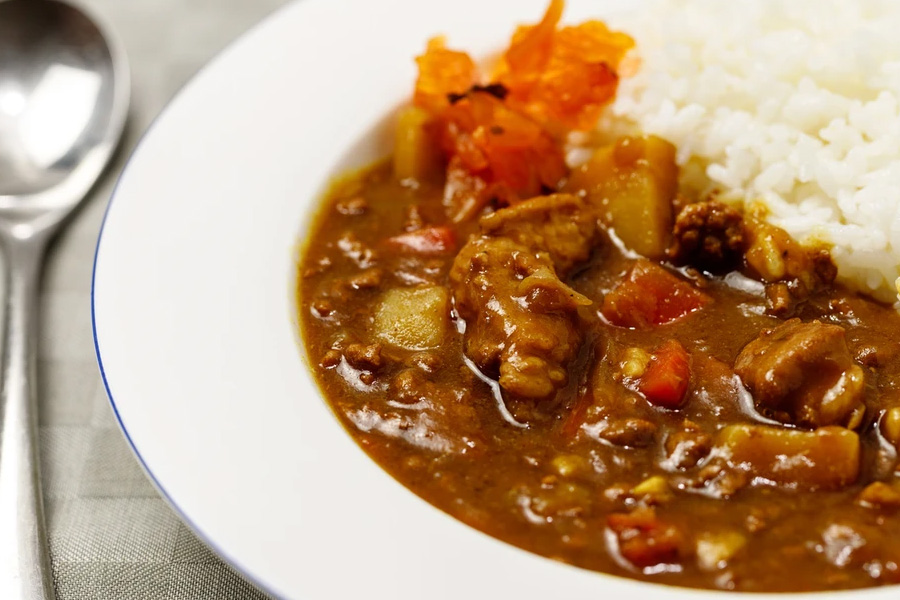
Japan’s Comfort Food Classic
When people think of curry, they often picture the rich spices of Indian curries or the bold flavors of Thai green curry. Japanese curry rice, known as kare raisu (カレーライス), is something entirely different. It is thick, mild, slightly sweet, and deeply comforting, making it one of Japan’s most beloved national dishes. You will find it everywhere, from school cafeterias and home kitchens to casual eateries and specialty curry shops.
Unlike the fiery curries of other countries, this Japanese food is a dish that children and adults can enjoy together. Its flavor is mellow enough for beginners yet satisfying for those who crave hearty meals. Over time, it has become a staple in Japanese home cooking, a symbol of warmth and nostalgia for many.
How Japanese Curry Arrived in Japan
Curry first came to Japan during the Meiji era (late 1800s) through the British, who had adopted it from India during colonial times. At the time, curry was considered a Western dish (yōshoku). It was adapted to suit Japanese tastes by thickening the sauce with flour and adding a touch of sweetness.
By the early 20th century, curry had found its way into the Japanese Navy’s menu to provide sailors with a nutritious, calorie-rich meal. From there, it spread into schools, becoming a familiar part of children’s lunches. Today, Japanese curry is as much a part of the country’s culinary identity as ramen or sushi.
What Makes Japanese Curry Unique

The most striking difference is its texture and flavor profile. Japanese curry is thicker than Indian or Thai versions, often resembling a stew. The sauce is usually made with curry roux blocks that contain a blend of spices, flour, and oil. This creates a smooth, gravy-like consistency.
The flavor is milder, with a balance of savory, sweet, and just a hint of spice. Apples, honey, or grated vegetables are sometimes added for natural sweetness. The result is a dish that feels rich and satisfying without overwhelming the palate.
Common Ingredients in Japanese Curry
The standard version of Japanese curry typically includes:
- Meat – Beef, pork, or chicken are the most common choices.
- Onions – Slow-cooked to bring out sweetness.
- Carrots – Add color and natural sugar.
- Potatoes – Make the dish hearty and filling.
Beyond these basics, cooks often experiment with additional ingredients:
- Mushrooms for an earthy depth.
- Eggplant for a soft texture.
- Green beans or bell peppers for freshness.
- Seasonal vegetables such as kabocha pumpkin in autumn.
The beauty of Japanese curry is its adaptability. Families often have their own version, adding ingredients that reflect local produce or personal preference.
Popular Toppings for Japanese Curry

While curry rice is delicious on its own, toppings can transform it into a new experience:
- Tonkatsu – A breaded, deep-fried pork cutlet served on top turns the dish into katsu curry, one of the most popular variations.
- Cheese – Melted cheese adds creaminess and a rich, milky flavor.
- Fukujinzuke – Sweet-sour pickles made from daikon radish and other vegetables, offering a refreshing contrast.
- Onion pickles – Known as rakkyo, these add a mild tang.
- Soft-boiled egg – The runny yolk blends into the sauce, making it extra silky.
- Tofu – For a lighter or vegetarian-friendly option.
Japanese Curry Brands and Roux Blocks
One reason Japanese curry is so easy to make at home is the availability of curry roux blocks. These pre-made spice mixes simplify the process while delivering a consistent flavor. Some well-known brands include:
- Vermont Curry – Mild and slightly sweet, often containing apple and honey.
- Kokumaro Curry – Rich and smooth with a balanced flavor.
- Golden Curry – A classic choice with medium spice levels.
- Java Curry – Spicier and more aromatic than the average Japanese curry.
Most supermarkets in Japan stock several varieties, from mild to extra hot, so you can choose your preferred heat level.
How to Cook Japanese Curry at Home

While every family has its own twist, the basic method remains similar. Here is a classic approach using curry roux blocks:
- Prepare the ingredients – Cut your choice of meat, carrots, onions, and potatoes into bite-sized chunks. Aim for about 3 cm pieces.
- Brown the meat – In a large pot, heat oil and sear the meat until the surface is lightly browned.
- Cook the vegetables – Add the onions, carrots, and potatoes. Stir-fry for several minutes until the onions start to soften.
- Add water – Pour in enough water to cover the ingredients, following the instructions on your curry roux packaging.
- Simmer – Bring to a boil, reduce heat, and simmer for 10–15 minutes, or until the potatoes are tender.
- Add the curry roux – Turn off the heat, break the roux into blocks, and stir until fully dissolved. The sauce will thicken as it blends.
- Simmer again – Return to low heat for a few minutes to deepen the flavor.
- Rest before serving – Many Japanese cooks let the curry sit for an hour or more to allow the flavors to meld.
Serve over hot steamed rice, and enjoy the comforting aroma that fills the kitchen.
Regional Variations of Japanese Curry
While the basic concept is the same, different regions of Japan have their own takes:
- Hokkaido Soup Curry – A thinner, spicier broth served with large, colorful vegetables and rice on the side.
- Kanazawa Curry – Rich, thick curry served with shredded cabbage and tonkatsu, often on a stainless steel plate.
- Okinawan Curry – Sometimes includes tropical vegetables or Spam, reflecting local ingredients.
Japanese Curry in Restaurants
Curry restaurants are common across Japan, ranging from quick-service chains like CoCo Ichibanya—where you can customize spice levels and toppings—to small, family-run shops with secret recipes passed down for generations.
CoCo Ichibanya, in particular, has made Japanese curry famous internationally, allowing customers to choose rice portion sizes, toppings, and heat levels from mild to extra hot.
Japanese Curry at Home: A Family Tradition
For many Japanese households, curry night is a weekly ritual. It is easy to prepare in large batches, making it perfect for busy families. Leftovers are often even better the next day, as the flavors deepen overnight. Curry is also a go-to dish for students and young professionals because it is inexpensive, filling, and requires minimal cooking skills.
Tips for Perfecting Your Curry
- Sauté the onions longer – Deeply caramelized onions bring natural sweetness.
- Add a secret ingredient – Some cooks use grated apple, soy sauce, Worcestershire sauce, or even chocolate for complexity.
- Balance the thickness – If it is too thick, add a splash of water. If too thin, simmer longer without a lid.
- Make it in advance – Letting curry rest for several hours or overnight enhances the flavor.
Why Japanese Curry is Loved by Travelers
For visitors to Japan, curry rice offers a comforting break from sushi, sashimi, or ramen while still being distinctly Japanese. It is also widely available, inexpensive, and filling. Whether you try it in a bustling Tokyo chain restaurant or a quiet countryside diner, it is a dish that connects people through its warmth and simplicity.


